

The GTA 6 wanted system is the biggest rework of police attention in the series so far. The stars are still there — six of them this time, one more than GTA V’s five — but underneath them sits an entirely new layer built around a simple question: what do the police actually know about you? In Leonida, a crime does not automatically mean a chase. A witness has to report you, the police build a picture of the suspect from what they have seen, and the colour of your stars tells you exactly how complete that picture is.
That makes escaping a very different skill from the one GTA V taught. This guide explains how heat works, what every star state means, how to clear each piece of evidence the police hold on you, and how to get away cleanly — based on what post-launch guides have documented in the released game. Where something is only single-sourced or still unconfirmed, we say so.
Last updated: 22 November 2026.
At a Glance
- The wanted level caps at six stars, up from five in GTA V (Confirmed — Polygon, GameSpot).
- Crimes only generate heat if a witness reports them; no witnesses, no wanted level (Confirmed — Polygon).
- Your stars change state — hollow, solid, flashing, gray and red — to show what police know and whether they can see you (Confirmed — Polygon).
- Heat icons under the stars show what police can identify you by: appearance, outfit, vehicle, weapon, partner and CCTV.
- Every heat icon can be cleared — change clothes, respray or swap your car, holster your weapon, split from your partner, destroy CCTV footage.
- A persistent Criminal Profile tracks how you commit crimes across the whole game, not just during chases (Confirmed — PowerPyx).
Six Stars Are Back
Confirmed by Polygon’s post-launch guide, and consistent across GameSpot and Beebom coverage: the wanted system caps at six stars, displayed at the top-right of the screen. GTA V stopped at five, so there is an extra rung of escalation for a long spree.
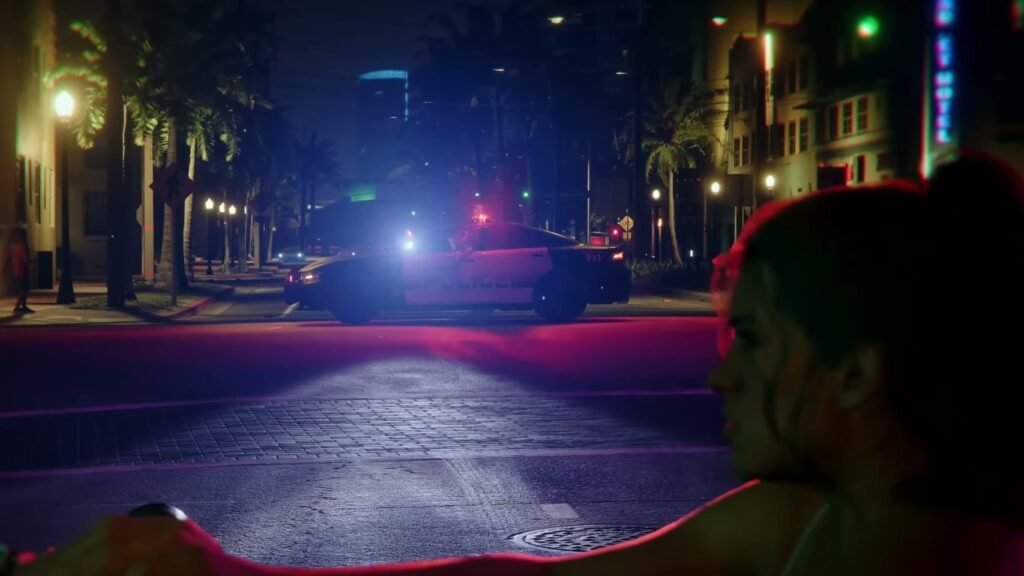
Your star count scales with the severity of what you do. Polygon’s rough guide: a carjacking is worth about one star; a robbery or assaulting a couple of people lands around two stars; multiple murders push you to three; and reaching six stars takes a prolonged crime spree rather than a single act. At one star, expect one police car with two officers. Two stars bring several police cars. At three stars, police call in air support — an armed helicopter (Confirmed — Polygon). Precise unit counts beyond three stars have not been itemised by a top-tier post-launch source yet, so treat any exact lists you see elsewhere with caution.
One rule matters from the first star onward: if the police know your identity, they open fire on sight — except at one star, where they try to arrest you first (Confirmed — Polygon). Reported by the community guide at gta.guide: at one star, officers use Tasers against an unarmed suspect, and breaking free after being grabbed post-tase is harder than in past games.
Heat Zones: How a Chase Actually Starts
The in-game term for wanted attention is heat, and the system is driven by reports, not by the game simply noticing you (Confirmed — Polygon). When a crime is reported, a red search area appears on the map around the scene — the heat zone. If you leave the zone and stay unspotted, your wanted status expires; how long that takes scales with your star count.
The flip side is just as important: crimes do not automatically generate heat. Police are only alerted if a witness actually calls them in. Commit a crime with no witnesses — or only criminal witnesses — and there is no wanted level at all. Witnesses can also hear crimes in densely populated parts of Leonida, which is why stealth kills in remote areas, or a quiet shop robbery with one clerk and no civilians, are the reliable way to stay at zero heat (Confirmed — Polygon). Reported by Beebom: alarms and GPS trackers fitted to some stolen vehicles can also alert police, so witness calls are not the only trigger to watch.
Reading the Stars: What Each State Means
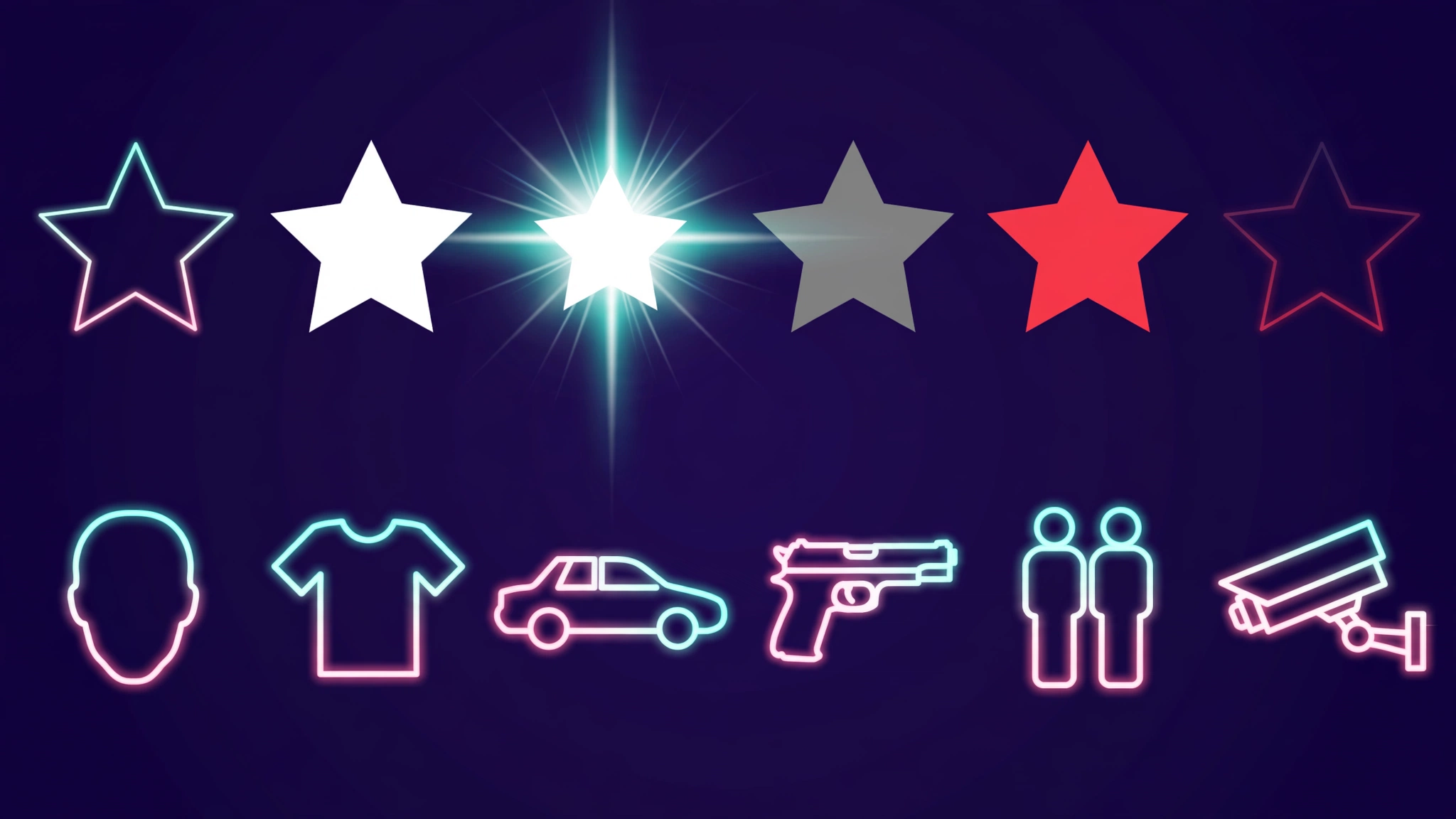
The most useful change from GTA V is that your stars are a live readout of the police’s knowledge (Confirmed — Polygon; consistent in GameSpot and Beebom):
- Transparent/hollow stars — a crime has been reported, but the suspect is unknown. You can slip away before police even arrive.
- Solid white stars — police have spotted you and know your identity. This is an active pursuit.
- Flashing stars — police are losing track of you; you have broken their line of sight.
- Gray stars — police have lost sight of you but are still searching the area. This is your best window to change clothes, vehicle or appearance.
- Red stars — you are wanted inside your last known location, the heat zone, and police there know who you are.
- Transparent red stars — you are still wanted in the zone, but police hold no suspect identifiers. They may still react if they see a visible weapon.
Learning to read these at a glance is the core evasion skill in GTA 6 — far more than it ever was in GTA V, where the stars mostly just counted. Our GTA 6 gameplay guide covers how this fits into the wider moment-to-moment systems.
Heat Icons: What the Police Know About You
Underneath the stars sit heat icons showing exactly what police can identify you by (Confirmed — Polygon; also GameSpot): your appearance (head icon), your outfit (clothes-hanger icon), your vehicle (car icon), a visible weapon, your partner (double-heads icon — police know two people committed the crime), and CCTV (camera icon). Each icon is a piece of evidence, and each one can be cleared (Confirmed — Polygon):
- Appearance — wear a cap and sunglasses, or get a haircut.
- Outfit — change your clothes. Keep a spare set in your car, or buy a new outfit in a shop.
- Vehicle — respray at a Pay ‘N Spray once you have lost the cops, or simply swap vehicles.
- Visible weapon — holster your sidearm. Longarms cannot be hidden on your body, so drop them or stow them in the vehicle trunk.
- Partner — split up from your partner so you are no longer identified as a pair.
- CCTV — find the recorder at the scene (in shops, usually behind the counter) and destroy the footage. One exception: if the icon shows cloud storage, the footage cannot be destroyed — a disguise is your fallback.
A small detail with big consequences: wearing a mask before a crime genuinely helps, but putting a mask on after the crime only makes you more suspicious (Confirmed — Polygon). Plan the disguise before you act, not during the getaway. New players should pair this with our GTA 6 beginner guide, which covers the early hours where most first arrests happen.
How to Escape: The Playbook
Polygon’s escape playbook is built on distance first, disguise second. Create distance with a fast vehicle, then hide: swap vehicles, go off-road, dive underwater, or disappear into buildings and forests. While you are escaping, avoid casualties — shooting police or hitting civilians raises your wanted level and widens the search. If you must fight, wounding limbs incapacitates without killing and keeps escalation down (Confirmed — Polygon).
Reported by Beebom: at six stars, the “hot area” effectively locks down the entire map, which is why the disguise tools matter most at the top end — there is no quiet corner left to hide in. Reported by gta.guide: occasionally a bystander can even mistake you for a culprit, so a low profile helps even when you have done nothing. The same guide notes you obtain a police scanner during an early Chapter 1 story mission, which helps you hear the search developing.
The Criminal Profile: Heat That Follows You
Escaping a chase is no longer the end of the story. Confirmed by PowerPyx’s trophy documentation: GTA 6 has a persistent Criminal Profile system that tracks how you commit crimes across the entire game, not just during a pursuit. The trophy Actions Speak Louder requires 500 actions that affect your Criminal Profile, and PowerPyx warns that the “Irredeemable” criminal profile is permanent and makes police more aggressive. Reported by Financial Express: the profile works across four tiers and affects NPC hostility and police severity, in the style of Red Dead Redemption 2’s Honor system — those tier specifics are single-sourced, so treat them as reported rather than confirmed. The wanted system is one of several systems we track in our confirmed features roundup.
What Is Not Confirmed Yet
Be careful with one popular claim: that the military or National Guard rolls in at five or six stars. That is unconfirmed. The claims circulating online come from low-credibility sites; GameSpot’s pre-launch coverage only speculated that the military “could” return, and no top-tier post-launch guide has documented military units in the released game. Until a credible source verifies it in-game, we list it as unknown — and the same goes for exact per-star unit lists beyond the one-to-three-star responses Polygon documents. We will update this guide as stronger documentation appears; our GTA 6 FAQ tracks other common questions the same way.
FAQ
How many stars is the maximum wanted level in GTA 6?
Six stars, one more than GTA V’s five (Confirmed — Polygon, GameSpot). Reaching six takes a prolonged crime spree rather than a single serious crime.
What is “heat” in GTA 6?
Heat is the game’s term for police attention. When a crime is reported, a red heat zone appears around the scene on your map. Leave the zone and stay unspotted and your wanted status expires — but if the police identified you, your appearance, outfit, vehicle and more stay flagged as heat icons until you change them (Confirmed — Polygon).
Can you commit crimes with no wanted level at all?
Yes. Crimes only generate heat if a witness reports them. No witnesses — or only criminal witnesses — means no wanted level (Confirmed — Polygon). Just remember that witnesses can hear crimes in busy areas, and alarms or GPS trackers on stolen vehicles can reportedly alert police too (Reported — Beebom).
Does the military come at six stars in GTA 6?
Unconfirmed. Claims of military or National Guard responses come from low-credibility sites, and no major post-launch guide has documented them in the released game. We will update this page if that changes.

GTA 6 World Hub is an independent fan publication and is not affiliated with Rockstar Games or Take-Two Interactive.

Pingback: GTA 6 vs GTA 5: Every Big Difference Explained
Pingback: GTA 6 Advanced Tips and Tricks: Pro Wanted, Money and Travel Tips